There is a point in every security platform deployment where clicking Save in a web console stops being a sensible operating model.
For me, that point arrives when configuration has all of the following characteristics:
- multiple environments;
- many interdependent policies;
- reusable lists and posture objects;
- policy ordering that changes behaviour;
- more than one person making changes;
- a requirement to understand what will change before production changes.
At that point, the problem is no longer simply “how do I configure Cloudflare?”
It becomes a configuration-management problem.
The model I ended up preferring
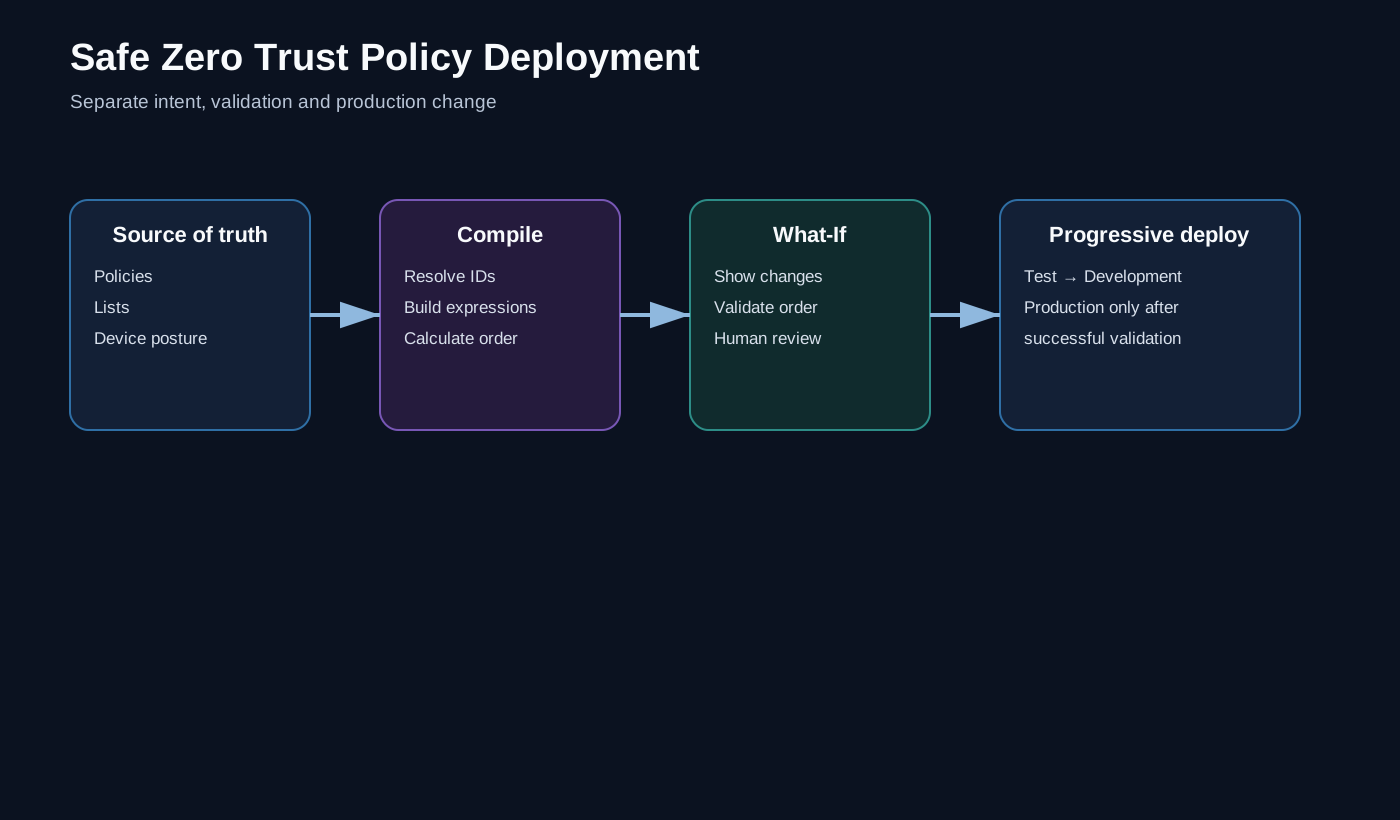
The operating model can be reduced to four stages:
Source of truth
      ↓
Configuration compiler
      ↓
What-If / validation
      ↓
Progressive deployment
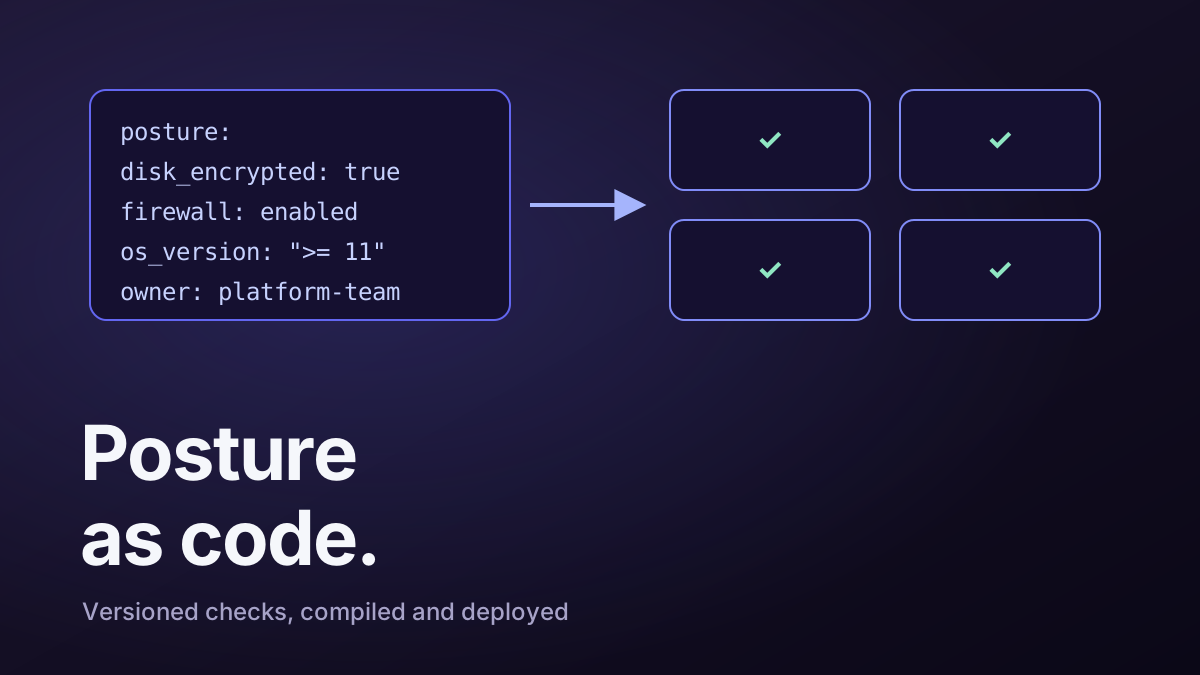
The source of truth describes intent: policies, expressions, rule settings, lists and device posture requirements. A PowerShell layer then converts that human-friendly representation into the API representation expected by the platform.
That separation is important. It means operators do not need to reason about opaque object IDs or hand-build a complex policy expression every time they make a change.
Treat configuration generation like compilation
I think of the transformation layer as a small compiler.
It has to perform jobs such as:
- load the desired policy definition;
- retrieve existing objects from the target environment;
- translate friendly list and posture names into API object IDs;
- construct the final filter expression;
- build nested rule settings;
- calculate policy order;
- validate the resulting configuration;
- emit an API-ready representation.
This is much safer than allowing every deployment script to independently assemble requests.
Policy ordering is state
One of the less obvious problems is precedence.
If a security platform uses a numeric precedence value to determine policy order, inserting a policy is not just a POST operation. The automation needs to understand the order that already exists and calculate a new sequence without duplicates or inversions.
The defensive rule should be simple:
If the generated order cannot be proven valid, do not deploy it.
That makes validation a deployment gate rather than a report someone might read afterwards.
What-If before change
The deployment path I like has two modes.
Check mode
Generate the target configuration and show:
- new objects;
- updates;
- removals;
- policy-order changes;
- validation failures.
Nothing is changed.
Deploy mode
Only after the change set has been reviewed do we run the same process with changes enabled.
The important design choice is that check and deploy use the same configuration compiler. A separate “preview” implementation will eventually drift from the real deployment code.
Progress through environments
A safe sequence is deliberately boring:
Test
  ↓
Development
  ↓
Production
Production should not be the first place where you discover that a filter expression is invalid or that reordering one rule causes dozens of unexpected precedence updates.
Lower environments earn their keep only when the pipeline compares the expected output at each stage and gives the operator evidence before the next promotion. Their existence alone achieves nothing.
Safety controls matter more than clever automation
The most useful automation I have built tends to contain explicit brakes:
- fail when ordering is invalid;
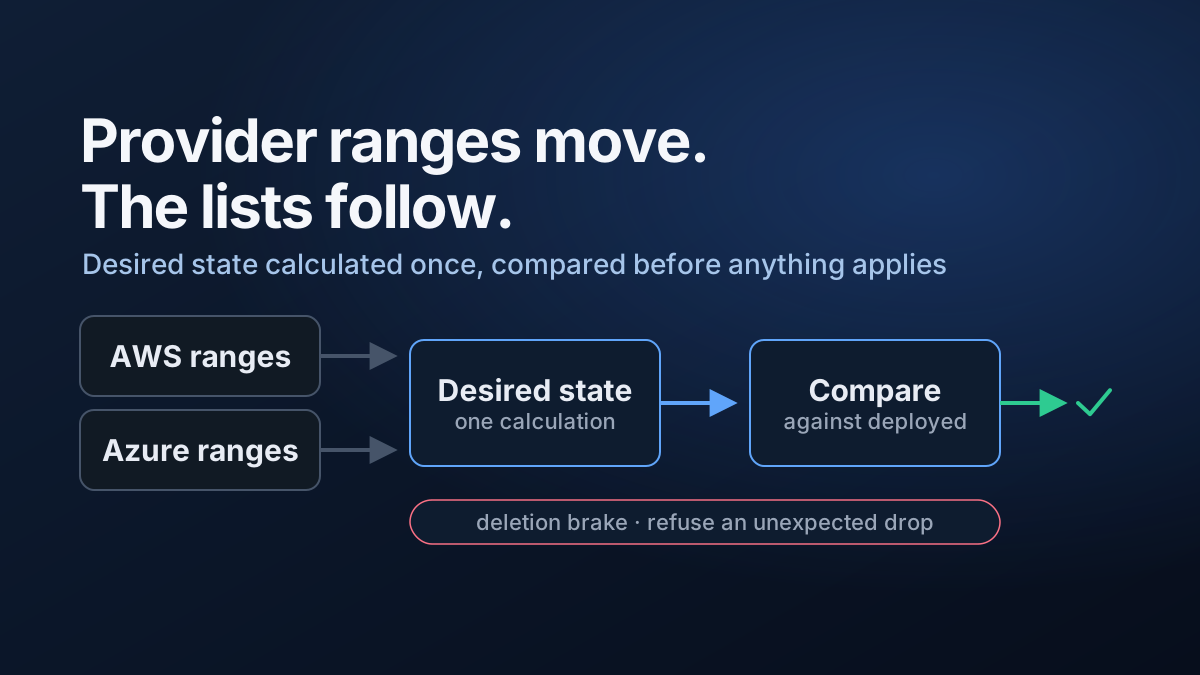
- fail when a deletion count exceeds an expected threshold;
- log the exact intended changes;
- require a separate action to move from preview to deployment;
- deploy lower environments first;
- retain enough information to reconstruct or back up changed objects.
Automation without guard rails can simply make a bad change faster.
The wider lesson
Security configuration deserves the same engineering discipline as application and infrastructure deployment.
When policy becomes business-critical, I want:
- versionable intent;
- deterministic transformation;
- validation;
- change preview;
- progressive delivery;
- rollback evidence.
That is the point where Zero Trust configuration starts to look less like administration and more like platform engineering.
The examples here describe a generalised design pattern derived from real operational experience. Environment names, identifiers, internal systems and production configuration have been intentionally omitted.